EUROCLIMA +
Forests, biodiversity and community development. Strengthening the national management of protected areas in Guatemala and Honduras
Project's duration
Start date
End date
Countries
- Guatemala
- Honduras
Beneficiaries
- Women
- Youth
- People with disabilities
Donor
Funded by
Budget
Main Theme
Secondary themes
SDGs
SDG 15: Life on land
Partners
- Consejo Nacional de Areas Protegidas (CONAP)
- Asociacion Progama de Gestion Ambiental Local (ASOPROGAL)
- Asociacion Cuerpo de Conservacion de Omoa (CCO)
Description
EUROCLIMA+ is the continuation and extension of the previous EUROCLIMA programme (2010-2017).
It promotes environmentally, climate resilient and sustainable development in Latin America, specifically for the benefit of the most vulnerable populations and strengthens the ability of Latin American countries to mitigate and adapt to climate change.
It also promotes research into, and integration of innovative approaches to, sustainable forest, biodiversity and ecosystem management, in line with national, sectoral and global public policy. Specifically, it implements, organises and disseminates the results of specific strategic and innovative projects aimed at vulnerable communities, which generate benefits and have replication potential in various areas belonging to the “Systems of National Protected Areas of Guatemala and Honduras”.
Goals
Overall objective
To contribute to the promotion of research and the creation of new approaches in the field of sustainable management of forests, biodiversity and ecosystems, in coherence with national sectoral and global public policies.
Specific objectives
To implement, organise and disseminate the results of specific strategic projects, targeting vulnerable communities and generating new benefits with potential for replication in other areas of the “National Protected Area Systems of Guatemala and Honduras”.
Activities
- Organisation of local, national and international seminars and workshops for the exchange of knowledge, lessons learned between Central American and European experiences developed by bodies and public administrations that are members of the EUROPARC Federation, on sustainable tourism models in the community and in protected areas.
- Construction of spaces for dialogue and technical exchange with a multi-stakeholder approach: establishment of a binational biological corridor; strengthening of the Trinational Alliance for the Conservation of the Gulf of Honduras – TRIGOH as a trinational space for dialogue, exchange of information and memoranda on protection and collaborative management for conservation
- Analysis and organisation of co-management methodologies and models in PAs with the participation of local communities and organisations.
- Strengthening and updating of priority instruments of the policies and regulations of the National Systems of Protected Areas of Guatemala and Honduras for their implementation.
- Multi-temporal analysis studies of the mangrove ecosystem, in collaboration with the National University of Guatemala.
- Organised socialisation and evaluation campaigns of successful experiences with local groups and related institutions.
- Financing to OLBs located in the PAs, for productive activities, conservation and adaptation to climate change through the mechanism of Financial Assistance to Third Parties.
- Promotion of the regional community tourism strategy (Guatemala-Honduras) for its consolidation.
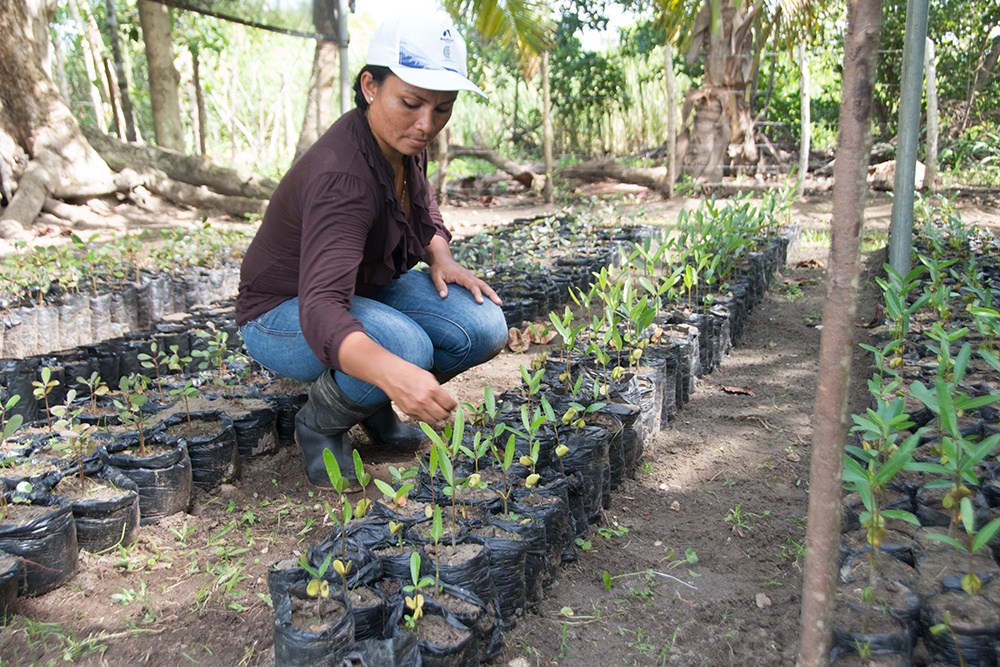
- Support to reforestation and conservation activities in protected areas.
Output and results
- Strengthened institutional, regional and national cooperation through dialogue and learning on innovative approaches for the mitigation and adaptation of forests, biodiversity and ecosystems to climate change with a focus on resilience of ecosystems and local communities.
- Institutional capacities strengthened in protected area systems, SIGAP in Guatemala and SINAPH in Honduras, systematising and disseminating successful management experiences.
- Capacity of local communities strengthened in initiatives that generate direct benefits for them and contribute to shared management and conservation of forests and biodiversity within protected areas.
Gallery